

Every December the same argument comes up in a lot of homes. Do you carry a real tree through the door and sweep needles until February, or do you pull a box out of the closet? More people are picking the box each year. Artificial christmas trees look much better than they did ten years ago, and a good one can pass for a fresh fir from a few feet away.
The buying part can still feel confusing. Needle material, branch count, lights, and stand design all change how the tree looks and how long it lasts. This guide covers what matters and what you can ignore. It also covers the fun side of the season, like christmas hats and matching pajamas for the family photo.
Why Many Families Buy Artificial Christmas Trees
Less Mess and Less Work
An artificial tree doesn’t drop needles, doesn’t need water, and doesn’t leave sap on your hands or carpet. You can put it up in late November and it will look the same on New Year’s Day. If someone in your house is allergic to pine or to the mold that grows on cut trees, that is often reason enough to switch.
Most people also like that the shopping is a one-time job. You don’t have to visit a lot, tie a tree to the roof of your car, or find a way to dispose of it afterward. You open the box, set it up, and that is it.
Cost and Environmental Impact
A good artificial tree costs more upfront than one real tree. Prices run from under a hundred dollars for a basic model to well over a thousand for a high-end one. But a well-made tree can last six to ten seasons, and over that time the yearly cost is usually lower than buying a real tree every year.
The environmental side is mixed. Artificial trees are made from plastic and metal, so making them leaves a carbon footprint. Studies suggest you need to keep one for roughly five to ten years before it breaks even with buying real trees, though the exact number depends on the study. Real trees have their own costs from farming, transport, and disposal. The honest answer is that how long you keep the tree matters more than which type you choose.
Types of Artificial Christmas Trees
PVC and PE Needles
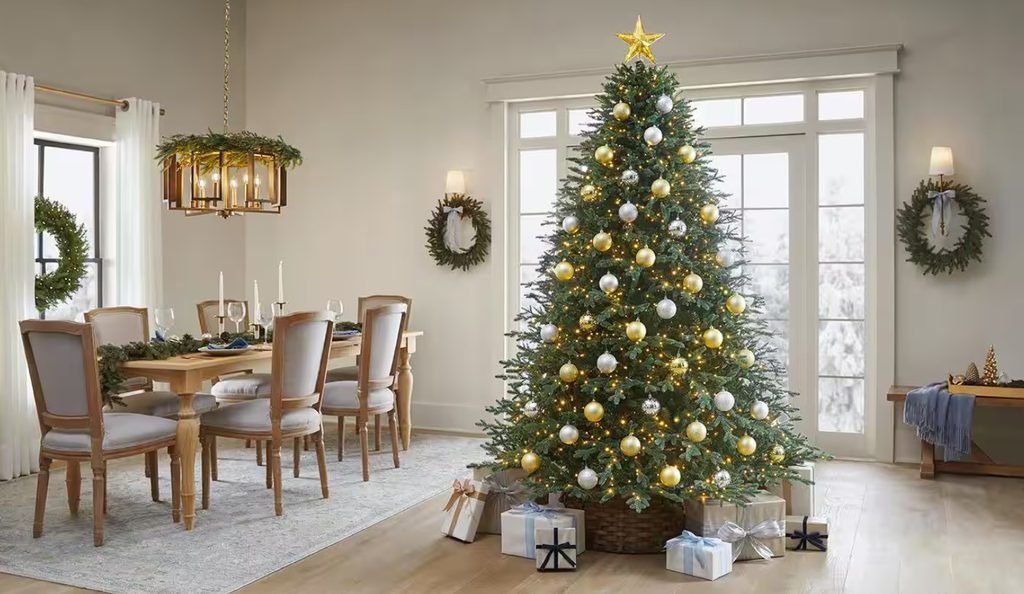
Most artificial christmas trees use one of two materials. PVC needles are thin plastic strips attached to the branch wire. They are lighter and cheaper, and they give a full, classic look. PE needles are molded from real branch tips, so they have a rounder, more natural shape up close.
Many mid-range and expensive trees use both. PE goes on the outer tips so the tree looks real, and PVC fills in the inner branches. If you want the best look for your money, a mixed tree is often the best deal.
Classic, Flocked, Slim, and Colored Styles
Classic green is the most popular style, and it goes with almost any ornament color. Flocked trees have a snow-like coating on the branches. Expect a little of that coating to come off, especially in the first year. Slim or pencil trees fit hallways, corners, and small apartments. White, silver, and black trees suit people who want a bold look.
A higher price usually means a more realistic tree, but not always. A mid-priced tree with well-shaped branches can look better than an expensive one with flat, thin ones. Look at close-up customer photos before you decide, because product images are often edited.
How to Pick the Right Size and Shape
Measure Your Room First
Start with your ceiling height and subtract about one foot. That space is for the stand and the topper. With an 8-foot ceiling, a tree between 7 and 7.5 feet is a safe choice.
Then measure the floor. A full tree can be 4 to 5 feet wide at the bottom, which is more than most people expect. Leave at least a couple of feet of walking space around it, especially if you have kids or pets.
Full, Slim, and Hinged Trees
Full trees have a wide base and fill a large living room well. Slim trees give you the same height with a smaller footprint. Hinged trees have branches attached to the pole, so you just fold them down after you put the tree up. Hook-in trees need you to attach each branch one by one, which takes longer. Most people find the hinged type easier to deal with.
Branch tip count is useful when the seller lists it, since more tips usually mean a fuller tree. Brands count tips differently, though. A tree with fewer tips that are spaced well can look better than one packed with thin ones. Use the number as a hint and read reviews for the rest.
Fire Safety Before You Buy
Look for the Flame-Retardant Label
Holiday decorations cause a number of house fires every year, so spend a few minutes on safety. Check that the tree is labeled fire-resistant or flame-retardant. That label means the tree burns more slowly, not that it can’t burn. The National Fire Protection Association’s Christmas tree safety guidance recommends keeping any Christmas tree at least three feet away from heat sources like fireplaces, radiators, and space heaters.
If you buy a used tree or get one from a relative, check its condition first. Older trees may not have a flame-retardant label, and the wiring on pre-lit models can wear out. When you are unsure, replace the lights or the tree.
Use Lights and Cords Carefully
Buy lights that carry a recognized testing mark, and check every cord for cracks or frayed spots before you plug it in. Don’t put too many strands into one outlet or extension cord.
Turn the lights off when you go to bed or leave the house. If you forget often, plug them into a timer so it happens on its own.
Pre-Lit or Unlit Trees
Why People Like Pre-Lit Trees
Pre-lit trees save time. The lights are already wired into the branches, so you plug in one cord and finish. They also look neater, because the wires follow the branches instead of being wrapped around them.
The downside is repair. If a section stops working, fixing it can be a hassle, and some cheaper trees are hard to repair at all. Look for LED bulbs, which stay cooler and use much less power than older bulbs. Some trees are built so one dead bulb doesn’t turn off the whole string. Many models also let you switch between warm white and multicolor with a remote.
When an Unlit Tree Makes Sense
Unlit trees cost less and give you control over the lights. You choose the color, the brightness, and how many strands to use. A common guideline for a full look is about 100 lights for each foot of tree height, and you can use fewer for a softer glow.
If you enjoy decorating, an unlit tree is a fun project. If you want the tree ready in an hour, go with pre-lit. Either way, keep the lights you buy and the tree in the same style, so the colors match.
Setting Up and Storing Your Tree
Assembly and Fluffing
Put the bottom section in the stand first, then add each section above it. Many trees have color-coded tips or labels that tell you which branch goes where. Once the tree is standing, fluff the branches. Work from the inside out and from the bottom up, and spread each tip so the layers cover any gaps.
Fluffing takes 20 to 40 minutes on a large tree. It looks like a boring step, but it changes the way the tree looks more than anything else you do. Use gloves, since the wire ends can be sharp.
Packing It Away
How you store the tree decides how long it lasts. Keep the original box if you can, or buy a storage bag with strong handles. Put it in a cool, dry place. Attics and sheds get too hot and cold, and damp garages can bend branches and damage wires.
Before you pack it, remove ornaments and tinsel. If the tree is unlit, take off the lights and wind them around a piece of cardboard so they don’t tangle. A few minutes in January saves you from a crushed tree next year.
Christmas Hats for Everyone Hats, Pajamas, and Photos Around the Tree
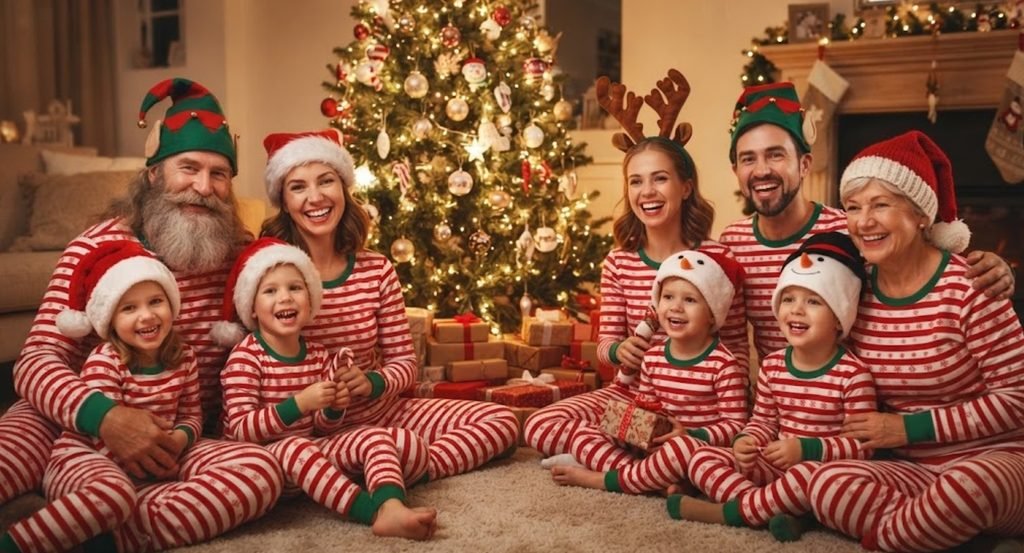
Many families have a small tradition on Christmas Eve or morning, like hot chocolate, a movie, and matching clothes. Christmas hats are a cheap way to add to it. Santa hats, elf hats, and knit beanies all show up well in photos. Keep a basket of them by the tree so guests can grab one.
Hats are also easy to buy in bulk for a party or a school event. Pick soft fabric for kids, since stiff trim can itch after an hour.
Matching Christmas Pajama Sets and Pants
Christmas pajama sets are popular because they are comfortable and look good in pictures. Many brands sell them for adults, kids, babies, and even dogs. If a full set feels like too much, a christmas pajama pant with a plain T-shirt or sweatshirt is an easy option. Plaid flannel and soft cotton blends are common, and they keep you warm during early morning gift opening.
Think about color when you buy. A green tree with warm white lights looks good next to red plaid. A white flocked tree goes well with navy or dark green. Check the care label before washing, since some printed designs fade in hot water. Washing hats and pajamas inside out on a gentle cycle helps them last until next year.
Conclusion
Artificial christmas trees suit people who want a low-mess tree they can reuse for years. Look at the needle material, measure your room, choose the type of lights you want, and check for a flame-retardant label. Store the tree properly and it can last close to a decade.
Once the tree is up, a few simple extras finish the room. Some hats, a set of matching pajamas, and warm lights are enough. Choose the tree that fits your space and keep the setup simple.
FAQs
1. How long do artificial christmas trees last?
A good tree lasts six to ten years, and some last longer with proper storage. Cheaper models often show wear sooner in the branches and lights.
2. Are artificial christmas trees better than real ones?
It depends on what you need. Artificial trees are reusable and low-mess, while real trees are biodegradable and have a natural smell. Your budget, allergies, and how long you plan to keep the tree should decide it.
3. What size artificial tree should I buy?
Subtract about one foot from your ceiling height to leave room for the stand and topper. For an 8-foot ceiling, a 7 to 7.5 foot tree is a safe size. Check the width against your floor space too.
4. Are pre-lit artificial trees safe?
Yes, if they carry a recognized safety mark and you use them as directed. Don’t overload outlets, check the cords each year, and turn the lights off when you sleep or leave.
5. Can I fix a pre-lit tree when the lights stop working?
Often you can. Check the fuse in the plug and look for loose or burnt-out bulbs first. If a section stays dark, replace that string or add a separate strand of lights over it.
